

Why Book Interactive Entertainment for Events?
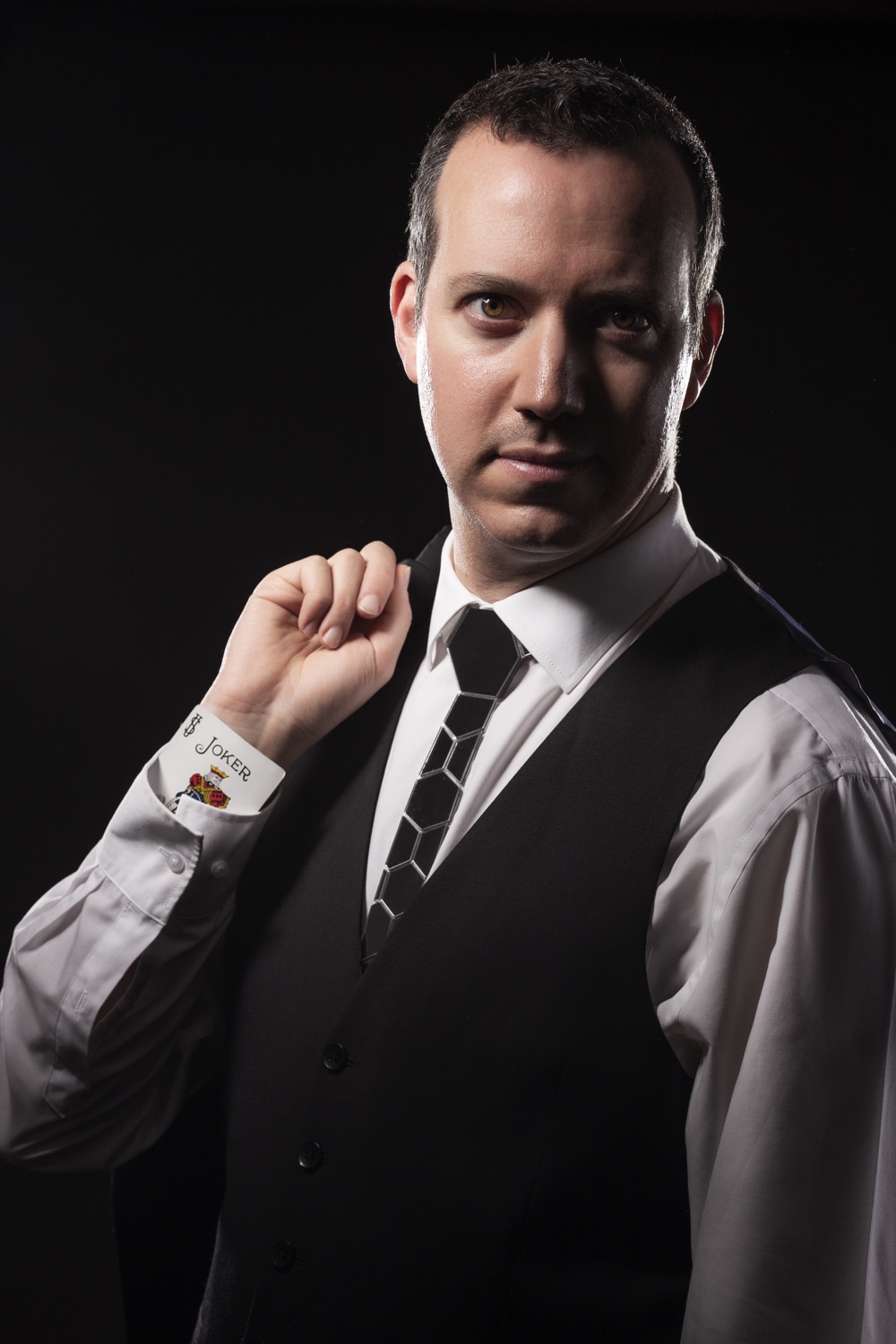
A beautifully dressed room, excellent food and a strong guest list do not automatically create atmosphere. At a corporate reception, wedding breakfast or private celebration, people still need a reason to cross the room, start a conversation and become part of the occasion. That is why book interactive entertainment is the more useful question: not simply how to fill a schedule, but how to make an event feel alive.
The right performer changes the energy without taking over the event. Contemporary close-up magic and mind reading create brief, astonishing moments between guests - moments that prompt laughter, discussion and the kind of spontaneous photographs no planner can stage. It is entertainment with a social purpose.
Why Book Interactive Entertainment Instead of Passive Acts?
Passive entertainment has its place. A band can set a tone, a DJ can carry a party and a keynote speaker can focus a room. Yet these formats ask guests to watch. Interactive entertainment asks them to participate.
That distinction matters, particularly when guests arrive from different departments, friendship groups or generations. At a networking event, people can gravitate towards colleagues they already know. At a wedding, the two families may not have met. At a luxury private party, guests may be polished but initially reserved. A skilled interactive performer gives people a natural point of connection without forcing an awkward icebreaker.
Close-up performance happens within small groups, so guests are not left waiting for a headline moment later in the evening. They experience something remarkable directly, then share it with the people around them. The response is immediate: “How did that happen?” becomes the start of a real conversation.
This is also why the quality of the performer matters. The aim is not to make an event noisier for the sake of it. It is to create momentum with confidence, warmth and impeccable judgement. No clichés, no gimmicks, and no interruption to conversations that are already working.
It Makes Guests Part of the Experience
The events people remember are rarely remembered as a timetable. They are remembered as a feeling: the surprise at a table, the shared laugh during a drinks reception, the story told again on the journey home.
Interactive entertainment is effective because it creates participation rather than presentation alone. A guest is not watching somebody else have an extraordinary experience from across the room. They are holding the object, naming the thought or witnessing an impossible outcome at close range. That proximity turns entertainment into a personal memory.
For weddings, this can bridge quieter parts of the day. During photographs, room turnarounds or the transition between ceremony and meal, guests need more than a drinks tray to keep the atmosphere moving. Sophisticated close-up magic gives every group something to enjoy, from grandparents to university friends, while allowing the couple to focus on their day.
For corporate events, the same principle has commercial value. An engaged guest stays longer, speaks to more people and leaves with a more positive impression of the host. When the entertainment reflects the standard of the event, it signals care in the details.
The Business Case for Corporate and Brand Events
At corporate functions, entertainment should earn its place. It may be there to increase dwell time at an exhibition stand, create a welcoming atmosphere before dinner, reward a team or help clients feel valued. The format needs to support that objective rather than become a disconnected diversion.
Interactive entertainment works especially well because it is adaptable. During a drinks reception, it can circulate naturally among small groups. At a networking event, it can create introductions without making anyone feel singled out. At an exhibition, it can stop passing delegates long enough for a meaningful brand conversation to begin.
Tailoring is where a premium booking becomes more than a performance. A well-considered routine can incorporate a product message, campaign theme or company value without turning into a sales pitch. The best brand integration feels intelligent and relevant. Guests remember the moment first, then the organisation associated with it.
There is a trade-off. If every element is branded too heavily, the experience can feel manufactured. If there is no connection at all, an exhibition booking may miss an opportunity. A professional consultation should establish the right balance: entertainment that attracts attention while preserving the sophistication of the brand environment.
It Solves the Awkward Parts of an Event
Every event has transition points. Guests arrive at different times. A room changes over. A couple is called away for photographs. Dinner runs slightly ahead or behind. These moments are rarely dramatic problems, but they can drain energy if left unattended.
Unlike a fixed stage show, roaming close-up entertainment is flexible. It can work around service, adapt to the pace of a drinks reception and reach groups wherever they are gathered. This makes it particularly valuable in venues with multiple spaces, large guest numbers or an itinerary that needs breathing room.
A stage performance can be equally powerful when the purpose is to give the entire room a shared focal point. For an awards dinner, executive event or high-profile celebration, a tailored mentalism set can create a collective climax. The choice depends on the room: close-up magic is ideal for circulation and conversation; stage entertainment is stronger when everyone needs to experience the same moment together.
Many events benefit from both. Close-up performance builds anticipation early on, while a concise stage set provides a memorable centrepiece later. The key is not to over-programme. Guests should feel entertained, not managed.
Premium Entertainment Protects the Guest Experience
Booking interactive entertainment is also a decision about representation. An entertainer is in direct contact with your guests, clients, senior leadership team or family. Their manner, appearance, timing and ability to read the room all reflect on the host.
That is why experience with premium audiences matters. A sophisticated audience does not need to be told when to have fun. They need an entertainer who can approach confidently, engage quickly and step away at exactly the right moment. The performance should feel effortless, even when the planning behind it is detailed.
This is particularly important for luxury occasions and client-facing events. The room may include VIPs, international visitors or people meeting for the first time. The right performer understands discretion, responds to the social temperature of the room and never relies on outdated comedy or intrusive participation.
Stephen Barry’s approach is built for this standard: intelligent, contemporary magic and mind reading designed around the audience, setting and purpose of the event. That means a wedding reception can feel relaxed and personal, while a global brand launch can feel polished, relevant and entirely on-message.
When Interactive Entertainment Is the Right Choice
Interactive entertainment is not a universal answer. If the brief is a formal conference with a tightly packed agenda, a roaming performer may not be the priority. If guests are attending primarily for a seated concert or headline speech, a supporting act should not compete for attention.
It is at its strongest when connection is part of the brief. Consider it when guests need to mingle, when there is a gap in the schedule, when mixed groups need an easy way to interact, or when the host wants an experience that cannot be replicated by a playlist and decorative backdrop.
Timing matters as much as format. A drinks reception is often ideal because guests are mobile and open to conversation. Table entertainment between courses can maintain warmth during a wedding breakfast or gala dinner. Exhibition performance needs a clear position and an approach that complements the stand team rather than obstructing them. A short stage set works best when the room is ready to focus.
The strongest bookings begin with practical questions: Who will be in the room? What should guests feel? Where are the natural pauses? What does success look like after the event? Those answers determine whether close-up magic, mind reading, a stage performance or a considered combination will have the greatest impact.
Choose entertainment that gives guests something to share, not merely something to watch. When the performance fits the people and the purpose, the event gains more than a memorable moment - it gains the atmosphere that makes every other detail matter.


Comments