.png)

How a Magician for Corporate Events Adds Value
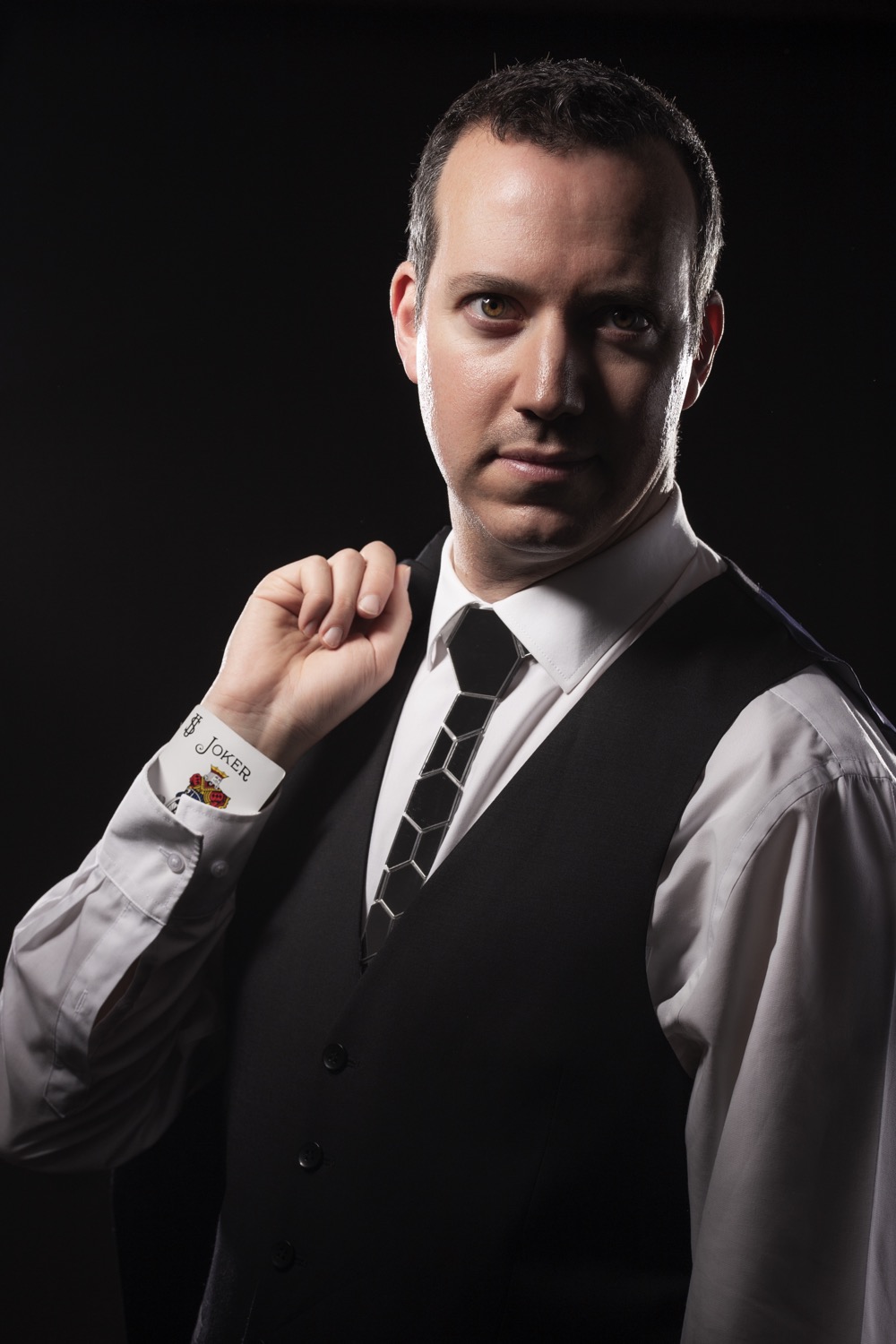
A magician for corporate events should do more than fill a quiet corner of the room. At a product launch, awards dinner or client reception, the right performance changes the atmosphere quickly: strangers begin talking, key guests stay longer and the event gains moments people are keen to share afterwards. That is the real value of intelligent live entertainment - not a trick for its own sake, but a room that feels more connected, energetic and memorable.
For organisers working with senior stakeholders, valued clients or a premium brand, the standard matters. Entertainment needs to feel considered from the first conversation to the final applause. No clichés, no gimmicks, and no act that competes with the purpose of the occasion.
Why a magician for corporate events works
Corporate events often bring together people with different reasons for attending. Some are existing clients, others are prospects. There may be colleagues who know each other well alongside invited guests who have never met. Even the best venue and catering cannot automatically create conversation between those groups.
Close-up magic and contemporary mentalism give people a natural reason to engage. A small group gathers around an impossible moment, reacts together, then starts talking. Crucially, the interaction does not demand that guests perform, volunteer reluctantly or become the subject of a joke. It is social entertainment with a light touch, delivered directly to the people in front of the performer.
That makes it particularly effective during the parts of an event that can otherwise drift: drinks receptions, arrival periods, table changes, networking sessions and the interval before a presentation. Rather than asking guests to make their own atmosphere, you give them a shared experience that starts it for them.
There is also a practical benefit for hosts. When guests are entertained in small groups, organisers have space to greet VIPs, solve last-minute issues and keep the event moving without the room feeling neglected. The entertainment supports the flow rather than becoming another logistical problem to manage.
Choose the format around the event objective
The strongest booking starts with a clear question: what does this event need guests to feel, do or remember? The answer determines whether close-up performance, a stage feature or a combination of both will have the greatest impact.
Close-up magic for networking and receptions
For a drinks reception or exhibition, close-up magic is usually the most flexible choice. It happens among guests, in short, polished sets, allowing people to join naturally without missing conversations, refreshments or an announcement. It gives a busy room focal points without stopping the event.
At networking events, this is especially useful for groups that have not yet found their rhythm. An experienced corporate magician reads the room, approaches with confidence and leaves guests talking to each other rather than waiting to be entertained again. The effect should feel spontaneous, yet the delivery is carefully paced around the schedule, venue layout and guest profile.
Mentalism for a more sophisticated edge
Mind reading creates a different kind of reaction. It is ideal where the brief calls for something intelligent, contemporary and slightly more unexpected than traditional magic. A thought revealed accurately in a guest’s hand or an apparently impossible prediction can become the story people retell at the bar, in the taxi home and in the office the following week.
Mentalism works particularly well for executive events, luxury dinners and client hospitality because it feels personal without becoming intrusive. The best material is never about exposing or embarrassing a guest. It is about creating a sense of genuine wonder in a refined, confident way.
A stage performance when everyone needs one moment
Where the agenda allows guests to be seated together, a tailored stage performance creates a shared peak in the event. This may be the ideal opener before dinner, a high-energy feature between presentations, or a finale after awards have been announced.
A stage performance should not simply be a longer version of close-up magic. It needs to work at the scale of the room, with clear sightlines, audience participation that feels safe and engaging, and material built for collective reaction. For groups of any significant size, production details matter too. Lighting, sound, staging and timing should be agreed well before the day.
Make entertainment part of the brand experience
A premium corporate event is an extension of the organisation hosting it. The venue, guest list, service and entertainment all communicate something. If one element feels dated or poorly judged, it can weaken an otherwise excellent occasion.
This is why brand alignment deserves more thought than choosing a performer from a generic supplier list. A magician can be briefed on the audience, campaign, product, company values and tone of the evening. For an exhibition team, that may mean drawing people to a stand and giving them a strong reason to pause. For a brand launch, it could mean building a key message or product detail into a memorable reveal. For an internal event, it may mean recognising the organisation’s culture while keeping the experience inclusive.
There is a balance to strike. Guests can spot forced branding immediately, and entertainment should never feel like a sales pitch in disguise. The most effective tailoring is elegant and purposeful: it strengthens recall while allowing the moment to remain genuinely entertaining.
What separates a premium corporate magician from a novelty act
The difference is rarely just the tricks. It is judgement.
A corporate audience may include board members, international visitors, clients, colleagues and partners in the same room. Some will be enthusiastic, some reserved, and some will have seen more than their share of event entertainment. A polished performer knows how to work across those groups without assuming everyone wants the same kind of interaction.
Presentation matters. So do discretion, timing and the ability to adapt when service runs late, speeches overrun or the room changes shape. A professional arrives prepared, communicates clearly with the event team and understands when to step forward and when to give the occasion space.
It is also worth asking how the entertainer handles mixed audiences. Smart, visual magic can cross language barriers effectively, while mentalism and spoken material may need adjusting for an international guest list. At a formal dinner, subtle table-side performance may be more appropriate than high-volume crowd work. At a high-footfall exhibition, pace and visibility take priority. It depends on the setting, but the expectation should remain the same: an experience that feels entirely at home in the room.
Plan the booking before the timetable is fixed
Entertainment is easier to place well when it is considered early. Booking at the final stage can still work, but it often means fitting a good idea into the gaps left by everyone else. Involve your magician while the event schedule is being shaped and you can use performance strategically.
For a reception, clarify the guest arrival window, whether there will be a formal welcome, and when food service begins. For a dinner, establish the time between courses, speech timings and whether the performer will move between tables or present to the whole room. For an exhibition, discuss stand position, visitor flow, lead-capture priorities and any restrictions set by the venue or organiser.
A useful briefing covers the audience size, venue, dress code, desired tone, key messages and any guests who require particular consideration. It should also include the commercial purpose of the event. Is the priority relationship-building, employee recognition, lead generation, brand exposure or simple celebration? Those details help shape the performance far more effectively than a vague request for “something impressive”.
Measure the impact beyond applause
Not every event outcome belongs in a spreadsheet, but corporate entertainment can be evaluated more clearly than many organisers expect. Look at how long guests stayed during the reception, whether people gathered around the brand space, the quality of conversations created and the feedback given by clients or senior leaders afterwards.
For exhibitions, teams may notice more visitors stopping, warmer opening conversations and a greater willingness to share contact details once an initial interaction has broken the ice. For internal events, the signal may be the photographs, messages and stories that continue circulating after the evening. For client hospitality, it is often simpler: guests leave feeling well looked after.
Entertainment is not a substitute for a clear event strategy, good hosting or a worthwhile reason to attend. It is the multiplier. When the foundations are right, live magic turns functional moments between agenda items into the parts guests remember most vividly.
The best time to consider a corporate magician is before the event starts to feel like a timetable. Give the experience a clear role, choose a performer whose style reflects the standard of your brand, and let guests leave with a story that belongs unmistakably to your event.


Comments