.png)
How to Engage Exhibition Visitors Effectively
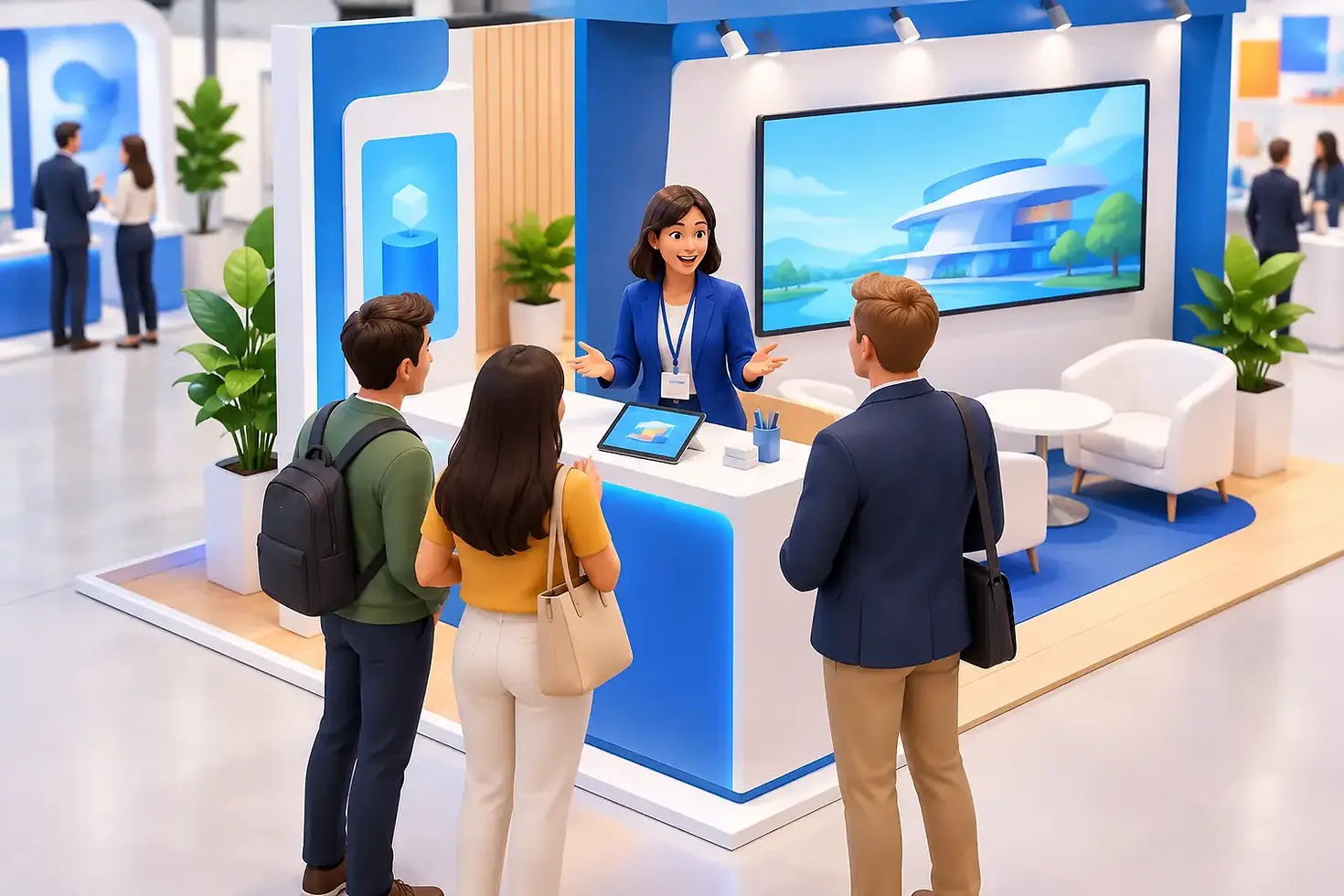
A busy exhibition hall can make even a beautifully designed stand disappear into the background. Knowing how to engage exhibition visitors is not about being louder than neighbouring exhibitors. It is about giving the right people a compelling reason to stop, participate and remember your brand long after they leave the venue.
For exhibition teams, the objective is rarely footfall alone. You need meaningful conversations with potential clients, qualified leads for the sales team and an experience that reflects the standard of your business. The strongest stands create a moment of genuine human connection, then give that moment a clear commercial purpose.
Start with the outcome, not the attraction
Before booking entertainment, commissioning a stand build or planning a giveaway, be clear about what success looks like. A product launch may need awareness and press-worthy content. A B2B trade show may demand quality conversations with senior decision-makers. A recruitment fair may be about making your employer brand feel more distinctive and approachable.
This matters because engagement tactics are not interchangeable. A competition can produce a crowd, but not necessarily the right crowd. A product demonstration can attract qualified buyers, but may struggle to draw them away from the aisle in the first place. The most effective exhibition activity combines an initial reason to stop with a well-planned route into conversation.
Agree a simple visitor journey with your team. Someone notices something different, approaches the stand, has a worthwhile interaction, meets the right member of staff and leaves with a reason to continue the relationship. If any stage feels unclear, the experience is likely to lose momentum.
Create a reason to pause
Exhibition visitors make fast decisions. They scan the hall, notice movement, judge whether a stand feels welcoming and decide within seconds whether it is worth their time. Your first task is not to explain every feature of your offer. It is to earn a pause.
A clear visual message helps. So does an open stand layout, visible people rather than staff hidden behind counters, and an activity that makes sense from several metres away. Avoid cluttering the frontage with too much copy or treating every surface as advertising space. Premium brands often benefit from confidence and restraint.
Live interaction is particularly effective because it changes the energy around a stand. Intelligent close-up magic or mind reading, delivered with the right degree of polish, gives visitors a low-pressure reason to stop without demanding a long commitment. It creates curiosity, draws in small groups and gives your team a natural opening line once the moment has landed.
The distinction is crucial: entertainment should support the exhibition strategy, not distract from it. No clichés, no gimmicks, and no performer turning the space into their own show. The best live experience keeps the brand at the centre, makes people feel included and leaves room for business to happen.
How to engage exhibition visitors through participation
Passive displays are easy to walk past. Participation gives visitors a role in the experience, which makes it more memorable and more likely to be shared with colleagues. That participation does not need to be complicated. In fact, it should be quick to understand and easy to join, even for someone who has only a few minutes between meetings.
A tailored interactive moment can connect directly to your message. A mentalism routine built around a campaign theme, a product benefit or a future-focused question can make an abstract proposition feel immediate. It can also create the kind of shared reaction that prompts a group to gather naturally, rather than forcing staff to chase attention in the aisle.
There is a trade-off. Highly immersive activities can be excellent for dwell time, but they may limit the number of people you can reach each hour. Fast, repeatable interactions build energy and footfall, though they need a sharp follow-up process to turn interest into leads. Choose the format that matches the size of your stand, expected visitor volume and sales objective.
Participation also works best when it feels optional. Visitors should never feel trapped by an over-eager approach or pressured into handing over details before they have received something of value. Sophisticated engagement is inviting, not intrusive.
Give the sales team a natural opening
A stand can be busy yet commercially unproductive if staff have no clear way to join the conversation. Plan the handover before the event. If you are using a live performer, agree the moments at which a member of the team will step forward, introduce themselves and ask a relevant question.
The question should be light but purposeful. Rather than asking, “Can I tell you about our services?”, try a prompt linked to the visitor’s role or reason for attending: “Which part of the business are you looking to improve this year?” or “Is this a challenge your team is currently facing?” The conversation can then become specific quickly.
Staff preparation matters just as much as the attraction. Every person on the stand should know the key message, the ideal customer profile and what happens after a promising conversation. They should also know when to step back. A visitor enjoying an interactive experience does not need three people waiting to pitch to them the moment it ends.
For larger teams, designate roles. Some people should welcome and qualify visitors, others should lead deeper product conversations, and one person should oversee lead capture. This avoids the familiar situation where everyone is occupied with the same group while high-value prospects walk past unnoticed.
Make brand integration feel considered
An exhibition experience becomes more powerful when it could only belong to your brand. That does not mean forcing a logo into every moment. It means reflecting the character, ambition and message of the business with enough care that the activity feels intentional.
A luxury brand may want understated, elegant interaction that rewards curiosity. A technology company may favour intelligent, future-facing mentalism that creates discussion around innovation. A people-focused organisation might use shared moments to make a large stand feel warmer and more sociable. The approach depends on the audience and the environment.
Tailoring can extend to language, campaign themes, product stories and the way a performer introduces the interaction. When handled well, visitors do not see a separate entertainment feature. They remember an impressive encounter with your brand.
This is where professional standards matter. Exhibition floors are demanding environments: noise levels shift, schedules change, senior stakeholders arrive unexpectedly and teams need suppliers who can adapt without fuss. An experienced exhibition entertainer understands how to work around presentations, peak periods and quieter intervals while representing the client professionally throughout.
Build energy at the right times
Not every minute of an exhibition needs the same approach. The opening rush, lunchtime lull and final hour all have different visitor behaviour. Use your engagement activity deliberately rather than running it at one intensity from doors opening to doors closing.
At peak times, short, high-impact interactions can generate visible energy and pull people towards the stand. During quieter periods, longer conversations and more detailed demonstrations may be more valuable. If there is a keynote, product reveal or hospitality moment, plan activity around it so the stand feels active when visitors are most likely to return to the floor.
A roaming close-up magician can also be valuable beyond the stand itself. Used carefully, they can engage people in nearby networking areas, introduce the brand naturally and guide interest back to your space. This works best when the organiser permits it and the approach remains respectful of neighbouring exhibitors.
Capture leads without breaking the moment
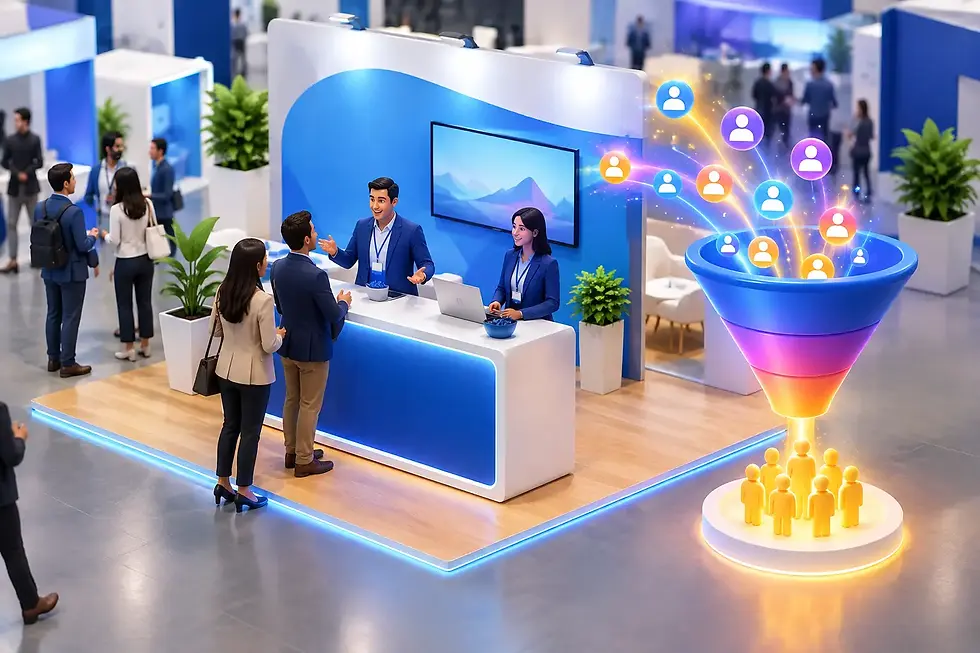
Lead capture should feel like the next logical step, not an administrative interruption. If a visitor has enjoyed a tailored experience and had a relevant conversation, they are far more likely to exchange details willingly. The key is timing.
Keep the process quick and explain the value of following up. Offer a useful next step, whether that is a booked demonstration, a consultation, access to an event-only resource or a conversation with a specialist. Collect only the information your team can genuinely use, and make sure your process meets your data protection responsibilities.
Do not measure success only by the number of badge scans. Review the quality of discussions, the seniority of contacts, time spent on the stand and the conversion of leads after the show. A smaller list of well-qualified prospects is often more valuable than hundreds of names gathered with no real intent.
Plan the follow-up while the exhibition is still live
The visitor’s experience continues after they leave the hall. Teams that wait a week to follow up lose much of the momentum created on the stand. Agree who owns each category of lead, what message they will receive and how quickly the first contact will be made.
Reference the conversation or experience where possible. A personal note is more credible than a generic sales email, particularly after a premium event activation. It shows that the interaction was not simply a device to collect data, but the beginning of a considered business relationship.
When exhibition visitors feel seen rather than processed, they remember the difference. Create that feeling with a clear objective, confident people and an experience worth stopping for - and your stand will have far more than passing traffic.


Comments