.png)

Best Magic for Product Demonstrations That Sell
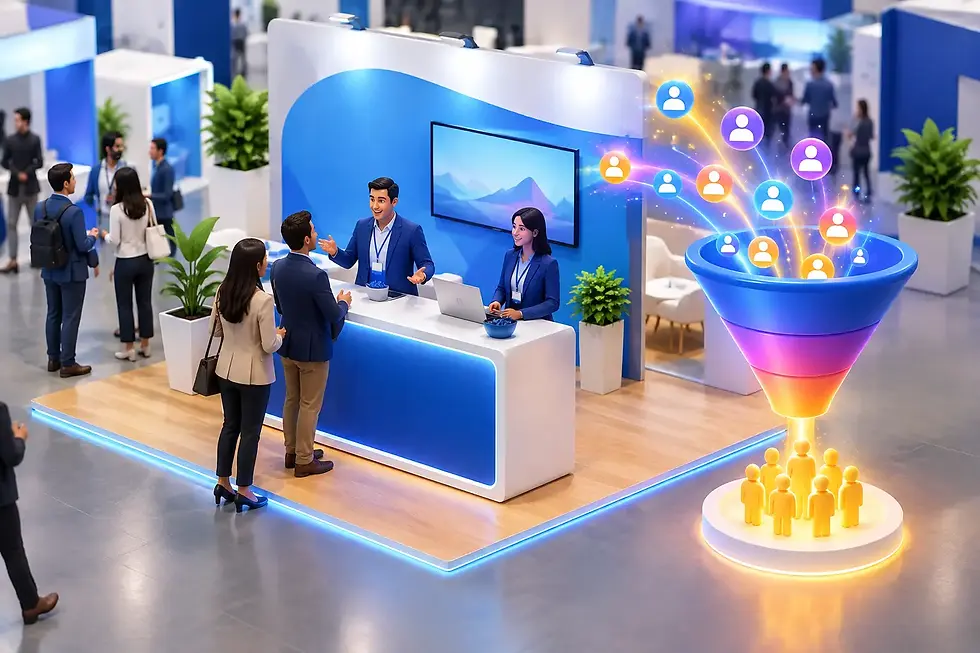
A busy exhibition floor gives a product only seconds to earn attention. The best magic for product demonstrations does more than create a crowd: it gives people a reason to stop, a moment to share and a clear route into the conversation your team needs to have.
That distinction matters. A clever trick performed beside a stand may entertain, but it will not automatically support a commercial objective. The right live magic is designed around the product’s benefit, the brand’s personality and the action you want visitors to take next. No clichés, no gimmicks, and no performer competing with the people selling the product.
For launches, trade shows, showroom activations and high-value client events, magic can turn a passive demonstration into something people actively want to witness. Done well, it makes a technical message feel immediate and gives your product a place in the visitor’s memory.
What the best magic for product demonstrations achieves
Product demonstrations often face the same practical problem: the most impressive feature is not always instantly visible. A new software capability, a more efficient process, a premium material or an invisible service benefit can be difficult to explain over exhibition noise and competing visual displays.
Magic creates a pattern break. It earns attention quickly, then directs it. A visual impossibility can introduce a product’s transformation, precision or speed; a mind-reading moment can frame personalisation, insight or decision-making. The performance is not the message itself. It is the doorway that makes the message easier to hear.
The strongest work also gives sales teams a warmer opening. Rather than approaching a visitor who is trying to move on, they join a conversation already charged with curiosity. That is especially valuable at exhibitions, where the difference between footfall and meaningful engagement is often a well-timed first interaction.
There is a trade-off. Magic should enhance the proposition, not reduce a serious product to a novelty. If the connection to the brand feels forced, audiences will remember the effect but not the demonstration. Planning must begin with the commercial story, not with a favourite trick.
Choose a format that suits the product and venue
There is no single best format for every demonstration. The right choice depends on audience volume, available space, the length of the sales conversation and how complex the offer is.
Close-up magic for one-to-one engagement
Close-up magic works particularly well around exhibition stands, networking receptions and product showcases where visitors arrive in small groups. Performed inches from the audience, it feels personal without requiring a stage, sound system or a fixed timetable.
This is often the most effective choice when the objective is to qualify visitors and introduce them to a sales team. A magician can gather a small audience, create an immediate shared experience and hand the interaction over naturally. The product team then has a receptive group rather than a single passer-by.
For premium products, close-up performance can also reflect the quality of the brand. Elegant, precise effects using considered props and tailored presentation feel far more appropriate than loud, generic routines. The atmosphere remains sophisticated, and the experience travels easily across the room.
Mentalism for insight, personalisation and premium positioning
Mentalism is especially suited to brands that want to communicate intelligence, foresight, data, choice or a highly personal service. A well-constructed mind-reading demonstration can feel startlingly direct, making it powerful for senior audiences, hospitality settings and private product previews.
It is not the right answer for every brand. A family-focused activation may benefit more from immediate visual magic, while a complex business-to-business offer can gain from mentalism’s conversational pace. The key is matching the tone of the performance to the way the brand wants to be perceived.
A short featured presentation for scheduled launches
Where there is a new product reveal, a defined presentation area or a large audience to address, a short stage-style performance can create genuine occasion. It gives the launch a focal point and provides a memorable opening before the product is introduced.
This format needs discipline. Long sets can hold up visitor flow, and a theatrical performance can feel disproportionate if the stand is small or the launch message is simple. The best approach is usually concise: create anticipation, reveal the core idea and move guests towards the product team, display or demonstration area.
Build the performance around one clear product truth
The temptation is to include every selling point. Resist it. A live magic moment is most effective when it amplifies one central idea visitors can repeat afterwards.
Perhaps the product saves time. Perhaps it transforms something ordinary into something valuable. Perhaps it offers precision, security, flexibility or a level of personal service that competitors cannot match. Once that message is chosen, the performance can be shaped to support it through its pacing, language and visual outcome.
A demonstration for a luxury fragrance, for example, may need a sense of anticipation and exclusivity. A technology launch may need clarity, pace and an intelligent reveal. A financial or professional-services brand may require subtlety and confidence rather than spectacle. The product does not need to be physically used in the magic for the connection to feel authentic, although that can work well when the item is practical, visually appealing and safe to handle.
Clients should also be realistic about what can be branded. A logo on a playing card is not strategy. Meaningful tailoring comes from how the experience frames the product benefit, the vocabulary it uses and the exact moment at which the team takes over.
Make the handover part of the design
The handover is where entertainment becomes commercial value. Before the event, agree what happens after each performance. Will a brand ambassador invite guests to try the product? Will a specialist begin a live demonstration? Should visitors scan a code, book a consultation or receive an invitation to a private showing?
The transition should be immediate and natural. If there is a long pause while someone searches for a brochure or waits for a colleague, the energy disappears. Brief the stand team on the performance’s central message and give them a simple first question that continues it.
For example, if the magic has highlighted speed, the demonstrator might say, “Would you like to see how that same principle works in the product?” If the moment has focused on choice, the question could invite guests to compare the options most relevant to their business. It feels like a continuation, not a sales interruption.
Lead capture deserves equal care. Asking every person to complete a form immediately can damage the atmosphere, particularly at a premium event. It may be better to reserve data collection for visitors who have watched the demonstration, asked a relevant question or requested a follow-up. Quality conversations are generally more valuable than inflated footfall figures.
Protect the experience with practical planning
A polished result relies on details that audiences rarely see. Exhibition organisers should consider sightlines, noise, power, lighting, crowd movement and the point at which a group becomes too large for the space. A talented performer can work flexibly, but the environment should support the objective rather than fight it.
Timing matters too. At a trade show, roaming close-up performances may work best during quieter periods to draw attention, while short featured moments can be scheduled around peak traffic. At a private launch, the performance may be most effective after guests have arrived but before speeches or formal presentations begin.
Brand safety is non-negotiable. The performer should understand the audience, dress code, product sensitivities and approved language. For regulated sectors, that may include careful review of claims and avoiding any implication that magic proves a product can do more than it genuinely can. Contemporary magic should feel exciting without becoming intrusive, embarrassing or off-brand.
This is why an experienced specialist is worth more than an off-the-shelf act. Stephen Barry develops intelligent, contemporary experiences around the audience, event environment and commercial purpose, giving product teams entertainment that supports the room rather than simply filling it.
Measure more than applause
Applause is encouraging, but it is not the only measure of success. Decide before the event what good engagement looks like: longer dwell time, more qualified conversations, demonstration bookings, samples taken, social content created or follow-up meetings arranged.
Ask the stand team what they noticed. Did visitors arrive in groups? Were they more willing to speak after watching? Could they repeat the key product message? Those observations often reveal whether the magic served the demonstration or merely created a crowd.
A memorable live moment gives a product demonstration its human edge. When the effect, the message and the follow-up action are planned as one experience, guests leave with more than a pleasant surprise: they leave with a reason to remember what your product can do.


Comments